Storm Damaged Fence Repair: What Wind Breaks and How to Fix It
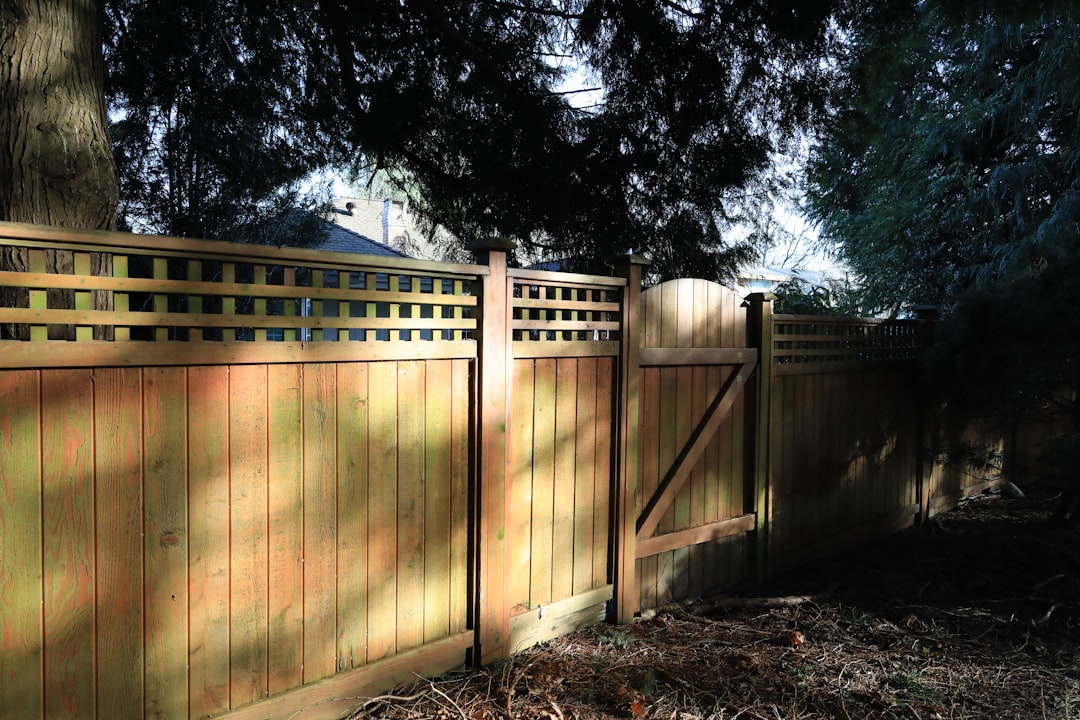
The morning after a spring storm in central Oklahoma, a lot of back yards look the same way. Two or three panels of privacy fence are lying flat in the grass, still nailed together, still perfectly square, with the posts that used to hold them pointing at the sky. The fence did not break. It was levered out of the ground and laid down like a gate that came off its hinges.
That picture tells you most of what you need to know about how wind takes a fence apart, and it is the opposite of what people expect. A solid privacy fence is not really a fence in a high wind, it is a sail. A sixty foot run of six foot cedar presents something close to three hundred and sixty square feet of surface with no gaps for air to pass through, and every pound of load that surface collects is handed to a handful of posts through their rails. The wood does not usually give up. The connection between the post and the red clay does.
So the first decision after a storm is not about materials, it is about triage: which sections are genuinely damaged, which are merely down, and which ones are still standing but have already lost. A good fence company will walk the whole run before quoting any of it, because the leaning posts you have not noticed yet are frequently a bigger line item than the panels lying in the yard. Sections that went over are obvious and finite. Sections that moved an inch and stayed up are the ones that come down in the next storm, and they are why a storm repair done badly gets done twice.
What the wind actually did, in three kinds of failure
Every wind failure on a residential fence is one of three things, and they cost very different amounts to put right.
The post pulled out of the ground. The concrete collar is still cast around the wood, intact, and the whole assembly has rotated in the soil. You can read it on the surface: cracked, lifted earth on the windward side of the hole, a mound of compressed soil on the other. Nothing is broken. The footing was too shallow, too narrow, or set in clay that had taken on three days of rain before the wind arrived, and saturated clay has a fraction of the lateral grip it has in August.
The post snapped. The collar never moved. The wood failed right at the top of the concrete, which is the highest stress point on the fence and also the spot most likely to be carrying decay. Cheaper than it looks in one way, since the hole is in the right place, and dearer in another, because the old footing and the stub inside it have to come out whole.
The frame or the cladding failed and the posts held. Rails pulled out of their pockets, fasteners withdrew, pickets split, or a bay racked while both posts stayed plumb. This is the best outcome available, and it is common on fences built with nails rather than screws, because a smooth nail in a cyclically loaded joint backs out a little at a time for years and then lets go all at once.
Name which of the three you are looking at before you call anybody. It turns "my fence blew down" into "two posts rotated and one bay lost its bottom rail", and the second version gets you a quote you can compare against another one.
Why it is usually the same two bays
Wind load is not even along a run. End posts, gate posts and the post at an outside corner carry far more than a post in the middle of a straight line, because the fence is only pushing on one side of them. A fence that steps down a slope concentrates load at the step, and a solid gate hands its post the gate's weight and the gate's sail area at once.
Local geometry does the rest. A gap between two houses funnels and accelerates wind, so a run crossing that gap sees more than the storm's own speed. If the same two bays go over every few years, the answer is not better pickets. It is more post, set deeper, with the load shared.
Photograph it before you touch it
This step costs nothing and is the one people skip.
Before anything is dragged to the curb, photograph the damage where it fell. Wide shots showing the whole run, the house behind it for context, and the direction the panels are lying, because that direction is evidence about what pushed them. Then close shots of each failure: the break at the concrete, the lifted soil around a rotated footing, the empty rail pocket.
Keep what you already had, too. An old photo that happens to show the fence standing straight proves prior condition better than any description, and a screenshot of the reported wind speeds for your area on that date establishes a single identifiable event rather than slow deterioration.
What an insurance claim on a fence usually looks like
A fence is generally covered as another structure on a homeowner's policy rather than as part of the dwelling, and that detail drives the rest.
Other structures coverage is normally a percentage of the dwelling limit, which is more than a fence will ever need, so the limit is rarely the issue. The deductible often is. A wind claim on a few panels and two posts can land close enough to a standard deductible that very little is recovered, and a claim on record carries its own cost at renewal.
Two things then decide the claim. The first is cause: wind and fallen trees are normally covered perils, gradual deterioration is not, and an adjuster looking at a snapped post with a soft, dark core is looking at a post decay had already compromised. That is where these claims get reduced rather than denied. The second is whether the policy settles at replacement cost or actual cash value, because the depreciated value of a fifteen year old fence is a much smaller number than new cedar and labour.
Ask for the estimate itemised by post, by bay and by material instead of as one lump sum. An itemised estimate survives review far better, and it protects you if only part of the damage is accepted.
The shared fence, and the conversation to have on day one
Where the back fence is the only thing between two yards, a storm repair is a negotiation before it is a construction job. Handle it in that order.
Start with where the fence actually sits. A fence built on the line and serving both owners is a different thing in practice from one set a few inches inside a single owner's line. If nobody knows, the plat or a survey settles it. Which yard the smooth face of the pickets looks into is not evidence of ownership, even though everybody treats it that way.
Then separate the two questions that always get tangled: who owns it and who pays for it. Oklahoma statute has long standing partition fence provisions covering fences between adjoining owners, and many newer subdivisions carry a recorded covenant saying how a common fence is shared. Read the HOA documents before the first phone call, because in these suburbs the answer is often already written down, alongside rules on height, material, colour and which way the finished side faces.
What works in the field is simple. Go next door the same day, while you are both standing in the mess and nobody has paid for anything yet. Agree on one contractor and one scope rather than each repairing your own side separately, which produces a fence rebuilt to two standards with a visible seam down it. Put the split in writing, even as a text message. If a tree from one yard took the fence out, expect that to come up, since responsibility usually turns on whether the tree was healthy or visibly dead and whether anyone had raised it before. If the neighbour will not engage, repair what you own and stop at the line.
Which sections get re-set and which get replaced
A post that rotated out of sound soil, with its concrete intact and its wood sound, can be re-set, and re-setting it properly means a bigger hole than it came out of rather than the same one. A post that snapped at the collar needs new timber. Probe the break face with a screwdriver: if the wood had lost strength before the wind arrived, the posts either side are the same age in the same soil and deserve the same probe.
Panels that came down intact are often fully reusable. Cedar still fastened to its rails that landed flat on grass is usually fine; the same panel that landed across a patio or twisted on the way down is not. Split pickets and rails cracked through at a knot get replaced individually, and a bay whose rails pulled out of their pockets gets re-hung on metal brackets rather than toe nailed back into the joint that already failed.
The bays nobody mentions are the ones still upright with a post you can rock by hand. Those have failed and simply have not fallen yet. Dealing with them on the same visit costs a fraction of dealing with them as a separate call after the next storm.
What a repair that survives the next storm looks like
A storm is the one time it is cheap to correct the original undersizing, because the hole is already open and the crew is already in the yard.
Depth is the biggest lever. A common rule of thumb puts a third of the total post length in the ground, so a six foot fence wants roughly two and a half to three feet of embedment, and a great many of the posts that fail were set at eighteen inches. Width matters nearly as much, since lateral resistance comes from the area of soil the footing bears against. Under the post, several inches of compacted gravel so the end grain is not standing in a bowl of water. Over it, a collar crowned so rain runs away from the wood, which is one pass with a trowel and buys years. Ground contact rated stock below grade, and preservative on every cut end, because treatment is a shell and a saw goes straight through it.
Then the upgrades worth asking about on an exposed line. Steel posts, either throughout or just at the corners, gates and ends that carry the most load, take the member in the ground out of the decay cycle and disappear behind the pickets. Closer spacing, six feet rather than eight, cuts what each post carries. Screws instead of nails at rails and pickets, since screws do not back out under cyclic load. And on a genuinely exposed run, shadow box or board on board construction still blocks sightlines while letting a meaningful amount of air through, so it collects noticeably less wind than a flat solid panel.
While you wait for a crew, brace what is leaning: a length of lumber run diagonally from high on the post down to a stake driven on the sheltered side will hold a compromised bay through an ordinary night, and downed panels lifted onto blocks stay reusable instead of soaking in wet grass for a week.
Somebody typing fence repair near me into a phone at seven in the morning with panels in the yard mostly wants the mess gone. The repair worth paying for is the one that quietly fixes why it went over, because around here the next wind is a season away, not a decade.